Metal Gate Contractor in Carlsbad, CA
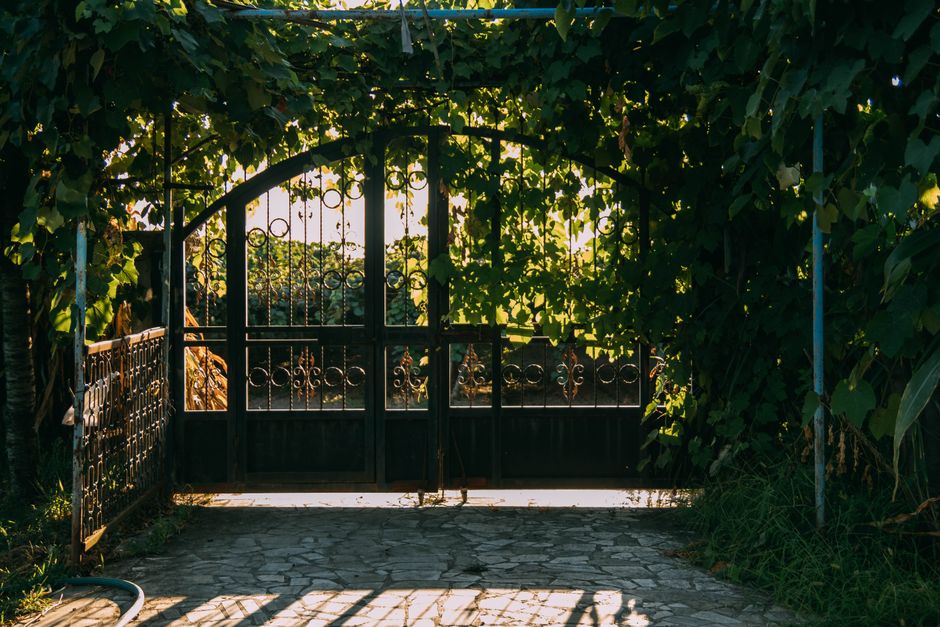
Plain answers about metal gates for Carlsbad homes, from choosing a metal that handles salt air near Carlsbad State Beach to planning work around the marine layer and judging a finished gate.
What We Cover
- Which Gate Metal Holds Up Best in Coastal Salt Air How steel, galvanized steel, aluminum and stainless steel behave in salt air near Carlsbad State Beach and the lagoons, and what protects each one.
- Why Gates Near the Lagoons and Beach Rust and Sag Common causes of rust, bubbling paint and sagging on metal gates near Agua Hedionda Lagoon, Batiquitos Lagoon and the beach, and real fixes.
- How a Custom Metal Gate Is Built and Installed A step by step look at how a metal gate is fabricated, coated and hung, and why posts, footings and squareness matter so much.
- How to Judge the Quality of Metal Gate Work Specific things to look for in welds, fit, hardware and coating so a homeowner can compare metal gate work with confidence.
- Does the Marine Layer Affect Gate Painting and Installation Why morning fog and damp coastal air matter for coating, touching up and installing metal gates, and how to time the work.
- How to Prepare Your Property for a New Metal Gate What to measure, check and clear before a metal gate goes in, from post condition and driveway slope to utility lines and opener power.
Metal Gate Contractor in Carlsbad, CA
A metal gate contractor in Carlsbad, CA works in some of the harshest conditions for steel and iron in San Diego County, because the ocean is never far away. This site is an informational guide to how gates are built, coated, and installed in that setting, written from the crew's side of the job.
Salt air from the surf near Carlsbad State Beach drifts inland and settles on every bare edge, weld, and hinge. A gate that looks sound on install day starts a slow fight with that salt almost immediately.
Salt Air and Marine Layer
Salt attacks bare metal first at welds, cut edges, and bolt holes. Crews grind welds smooth, remove mill scale, and seal those spots before finish coats go on, because a coating that skips them lifts from the edge inward.
The marine layer keeps mornings damp, and damp steel does not hold paint well. Painters wait for surfaces to dry, watch for dew, and avoid coating metal that still feels cool and tacky to the hand.
Ground Near the Lagoons
Ground near Agua Hedionda Lagoon and Batiquitos Lagoon stays humid and soft, which punishes a gate from below. Post bottoms sit in moist soil, hinge posts shift, and a heavy leaf slowly sags until the latch no longer lines up.
Footings need enough depth and a way for water to drain so it does not pool at the base plate. Posts set in poor soil move first, and the gate shows it long before the metal fails.
How the Work Gets Done
A custom gate starts with measuring the opening, the slope, and the posts, then moves through cutting, welding, grinding, coating, and hanging. Crews working anywhere between Oceanside and Encinitas, or close to Interstate 5, face the same coastal conditions, so that order holds.
Good work shows in the details: even weld beads, coated edges, plumb posts, and a leaf that swings and latches without dragging. Even then, a gate in this climate needs regular washing and inspection.
Guides
The guides here cover preparing a property for a new gate, choosing a metal for coastal salt air, how a custom gate is built and installed, how the marine layer affects painting, why gates near the lagoons and beach rust and sag, and how to judge the quality of the work.
Latest Guides
Metal Gate Contractor in Carlsbad: How Automatic Gate Openers Keep People and Pets Safe
An automatic gate opener keeps people and pets safe through several layers working together: photo eyes that watch the opening, contact edges that feel pressure, built-in reversing that senses resistance, and a manual release for when power or the operator fails. No single layer is enough on its own, and in Carlsbad's salt air each one needs regular attention.
Start With the Pinch Points

Every automatic gate has entrapment zones, and the safety devices only make sense once those zones are identified. On a swing gate, the zones are the arc the leaf sweeps and the gap at the hinge side. On a slide gate, they are the closing edge, the receiving post, and the gap where the gate passes a fence or pillar.
Walk the full path of the gate once, slowly, with the operator switched off. Note every spot where a hand, paw, or small body could be pinched or pushed. Then check whether a safety device actually covers each spot.
Photo Eyes: The First Line of Defense
Photo eyes send an infrared beam across the gate path, either from a transmitter to a receiver or from a single unit to a reflector. When something breaks the beam, the operator stops or reverses the gate.
The limit to remember is that photo eyes protect only the line where the beam runs. One pair mounted low across the opening will not cover the swing arc behind a leaf, and it will not cover the closing edge itself. Photo eyes alone do not make a gate safe.
Mount height matters for pets and kids
A beam set only at bumper height can pass over a small dog or a toddler. Many installers add a second, lower pair of eyes to catch low obstructions. If a gate has only one pair, ask whether the setup covers anything shorter than the beam.
Test them monthly
With the gate closing, pass a solid object such as a cardboard box through the beam. The gate should stop or reverse right away. Never test with your body, a child, or a pet.
Coastal fog, dew, and sunset glare
In western Carlsbad, including the Village, Olde Carlsbad, and Terramar, marine layer fog, morning dew, and a thin salt film collect on photo eye lenses. The result can be false triggers that stop the gate for no reason, or a weak signal that works one day and fails the next. Wipe the lenses with a soft damp cloth every few weeks and confirm the alignment light shows a solid lock.
West-facing gates near the coast have a second problem. Low late-afternoon sun can shine straight into the receiver and cause erratic behavior. Small hoods or shades usually help, and swapping the transmitter and receiver sides so the receiver faces away from the sunset often solves it completely.
Contact Edges: What the Beam Cannot See
A contact edge, also called a sensing edge, is a rubber strip mounted on the leading edge of a slide gate or on the edges of a swing gate. When it is pressed, it signals the operator to reverse. It catches what photo eyes miss, such as a person standing right at the closing edge.
To test one, press firmly along the strip with a hand while the gate moves slowly away from you, or use a padded object while it closes. The gate should reverse. Check the full length of the strip, because a dead section is a common failure.
Sun and salt wear the rubber down
Coastal sun and salt air harden and crack rubber. Look for splits, stiffness, or a strip that has pulled loose from its channel. A cracked edge can fail to register pressure, and the fix is replacement, not tape.
Reversing: A Backup, Not the Plan
Inherent reversing is the operator's built-in sense of resistance, usually read from motor current or encoder feedback. If the gate meets something, it stops and reverses.
This is a backup layer. A heavy metal gate can apply serious force before the motor senses enough resistance to react, so reversing alone should never be treated as protection for a person or an animal.
Never turn up the force setting
The most common way a gate becomes dangerous is a homeowner raising the force or sensitivity setting to stop nuisance reversals. Those reversals are a symptom. They usually point to a mechanical problem such as a dragging wheel, a binding hinge, a bent track, or a sagging leaf. Fix the cause, and leave the setting where the installer set it.
The Manual Release and the Twice-Yearly Disconnect Test
The manual release is the safety feature for when power or the operator fails. Depending on the opener, it may be a key lock, a lever, or a hand crank on the operator. Know where it is, keep the key somewhere every adult in the house can find it, and practice once so the first attempt is not during an emergency.
Twice a year, release the operator and move the gate by hand. It should travel smoothly with moderate effort and stay where it is left. If it swings or rolls on its own, or takes real force to push, the operator is straining and the reversing system cannot judge obstructions accurately.
Slopes and hillsides
Driveways in La Costa, Aviara, and the eastern neighborhoods often slope. A swing gate on a grade can be hard to balance, and a slide gate on a grade can roll by itself if the brake or gearing fails. The disconnect test shows this quickly, and a gate that will not hold its position needs attention before it goes back on automatic.
Power outages and evacuation
Near the open space edges of eastern Carlsbad, a gate that cannot open during a power outage can trap vehicles when people need to leave. Battery backup that opens or cycles the gate on power loss is worth considering.
Wind: A Carlsbad Problem Most Guides Skip
Fall Santa Ana winds push hard against solid metal swing gates. The operator can read that pressure as an obstruction and reverse or stop partway open, which leaves a gate half-swung in the wind. Solid panels catch far more wind than open picket designs. A proper gate stop and lock, plus an operator sized correctly for the leaf, reduce the problem.
Pets Get Hurt in Places Sensors Never Reach
A gate that reverses on contact is not automatically safe for pets. Animals get caught in gaps and rollers that no sensor covers, sometimes while the motor is off.
- Bottom gap: A small dog can squeeze under a gate, then be caught when it moves. Check the clearance under the gate.
- Picket spacing: Check whether a head or body fits between pickets. Mesh on the lower section closes both gaps.
- Rear roller and fence gap: On slide gates, paws and fingers are pulled in where the gate passes a post or fence. Screen mesh on the gate and guards over exposed rollers close these points.
Controls, Signs, and Habits
Keep remotes, keypads, and push buttons out of reach of children. Mount fixed controls where the person pressing them can see the whole gate but cannot reach through it.
Warning signs belong on both sides of the gate. They tell visitors, delivery drivers, and children that the gate moves on its own. Sun fades them, so replace them when the lettering weakens.
Salt Air and the Wiring Behind It All
Coastal air corrodes sensor terminals, wire connections, and the control board. Green or white crust at a terminal causes intermittent faults that can quietly disable a safety input. Near the coast, connections deserve a yearly inspection, and sealed or coated components are worth asking about.
Signs a Safety System Has Failed
Stop using the gate in automatic mode if any of these appear:
- It does not reverse during the monthly test.
- The fault light blinks.
- It closes faster than it used to.
- It makes new grinding noises.
- It stops short of fully open or closed.
Close the gate manually and leave the operator off until a qualified gate technician has serviced it. A gate that moves on its own by default should be treated as a machine, not a fixture, and a few minutes of testing each month is what keeps people and pets clear of it.
Metal Gate Contractor Carlsbad: Should a Driveway Gate Swing or Slide?
A driveway gate should slide when the driveway climbs away from the street or when the area inside the opening is cluttered, and it should swing when the ground is flat and the space inside is open. Most of the decision comes down to two measurements, the swing arc and the grade, plus a look at what sits along the fence line.
Start With the Space Inside the Gate
A swing gate needs open, level ground inside the property equal to the full width of each leaf, plus room for the operator arm. Walk the driveway and picture each leaf sweeping through its full arc. Anything in that path is a problem: a parked car, a planter, a step, or the apron of a garage.
If the arc is blocked, there are two honest options. A double leaf gate with shorter panels shrinks the sweep of each side. Or the layout points toward a slide gate instead.
Read the Grade Before Anything Else
Slope is the factor that surprises Carlsbad homeowners most. If the driveway rises as it leaves the street, which is common on hillside lots in La Costa, Aviara and Calavera Hills, an inward swinging leaf will strike the pavement partway open. The gate looks fine closed and then drags the moment the operator starts.
The check is simple. Set a straightedge at the hinge line and measure how fast the ground climbs across the arc. That number tells a gate builder more than any photo can.
What can be done for a swing gate on a slope
Several fixes exist, and each has a limit:
- Raked or stepped bottom rails clear the rising ground but leave larger gaps under the gate.
- Rising hinges lift the leaf as it opens, which adds a moving part to maintain.
- Articulated leaves fold to shorten the sweep, which adds complexity.
- Regrading the arc can work, but it is real site work.
On a steep uphill drive, a slide gate is often the simpler answer.
What a Slide Gate Needs Instead
A slide gate trades arc space for run-back space. Plan on clear, straight wall or fence length at least as long as the opening, and longer for a cantilever design. Before committing, check the side yard for trees, utility boxes, AC units and meters in that path.
The ground along the slide path matters as much as the driveway itself. The gate travels along the fence line, so that strip needs a consistent, buildable grade. A path that dips or climbs sharply will need retaining, a stepped design or a different gate type.
V track or cantilever
These two slide styles behave differently:
- A V track gate rides wheels on a ground rail.
- A cantilever gate hangs on roller trucks with no ground track, but it needs an extra counterbalance tail beyond the opening.
Cantilever avoids most track problems, but it needs more run-back length.
Debris and Drainage Decide the Track Question
Ground tracks fail from debris. Sand, leaves, gravel and the small stones that wash down sloped drives jam V track wheels and wear them flat. Near the beach in the Village, Terramar and along the coast highway, blowing sand makes this a routine problem. Sweeping the track regularly and inspecting the wheels keeps it manageable.
Never set a slide track in a low spot. Winter storms are infrequent here but can be intense, and water and silt collect in the lowest part of a driveway and bury the track. Confirm drainage across the opening before the track goes in. If the opening is the low point and cannot be changed, a cantilever gate avoids the problem.
Posts, Stucco and Wind
Swing gate posts need to be sized for leverage, not just weight. A long leaf works as a lever on its hinge post, and undersized posts or shallow footings let the gate sag, drag and bind. Warning signs include a gap that grows at the latch side, a leaf that drops when lifted, or a post that leans.
Many Carlsbad homes have stucco pilasters, and a heavy gate or operator should never hang from a stucco veneer. Hinges and operator brackets must anchor into structural steel, solid masonry or a properly designed footing. If you are unsure what is behind the stucco, have it checked before anything gets bolted on.
Wind is the other swing-gate weakness. Fall Santa Ana winds hit inland and canyon-facing lots hardest. A solid swing leaf catches wind like a sail, which strains the hinges, operator and latch and can blow a partly open gate. Slide gates and open picket designs handle wind better.
Security deserves a note here. Slide gates are not automatically more secure than swing gates. Security depends on the construction, the operator and the latching, not the direction of travel.
Metal and Finish Near the Coast
Salt carried in the marine layer corrodes plain steel fast within a few miles of the coast. Good choices there are hot dip galvanized steel with a powder coat over it, or aluminum, paired with stainless or galvanized hardware and fasteners. Paint over bare steel is the weak option.
Aluminum resists rust, but salt still pits it and attacks hardware made of other metals. No coating is permanent. Coatings chip, and coastal salt finds every breach.
Where rust starts
Check these spots during inspections:
- Welds and the bottom rail
- Hinge knuckles and roller brackets
- Any place where water sits or dirt collects
Bubbling under the powder coat means rust has already started underneath. Treat chips and scratches early. A periodic freshwater rinse removes the salt film that fog and mist leave behind, especially in areas rain does not reach. Do not pressure wash directly into operators, sensors or bearings.
Power, Safety and Daily Use
Solar operators work well across much of Carlsbad, but they do not perform identically everywhere. Near the coast, a long marine layer can cut panel output for days at a time, especially in early summer. Size the battery for cloudy runs, face the panel south without shade, and confirm the gate has a manual release that everyone in the house knows how to use.
Safety needs planning on both gate types:
- Automatic gates need entrapment protection such as photo eyes and contact edges placed for the gate's travel.
- Slide gates have pinch points at the posts and rollers that need guards or mesh.
- Swing gates have a crush zone at the hinge side and across the arc.
A separate pedestrian gate is worth adding. People should never walk through an automatic vehicle gate opening, and a walk-through gate lets the large gate stay closed for foot traffic, which saves wear on the operator.
Maintenance follows the operator manufacturer's schedule for inspecting and lubricating hinges, rollers and drive components. Coastal and dusty sites need service more often. Grinding, chatter or a change in run time usually signals a problem before it becomes a failure.
Settle These Before Design Starts
A few items can change the answer entirely:
- Stacking room at the street. Set the gate back far enough that a car can pull fully off the street while the gate opens. This matters on busier through streets and where the driveway meets the road on a slope.
- HOA rules. Many Carlsbad neighborhoods are planned communities with CC&Rs that may address gate style, color, height or location. Review them first.
- Underground lines. Call 811 before digging for footings, a track foundation or conduit. Driveway edges and side yards often carry gas, water, electric and irrigation lines.
A Quick Way to Decide
Choose a swing gate when the driveway is flat, the arc is clear, the posts can be built properly, and the lot is not exposed to heavy wind. Choose a slide gate when the driveway rises from the street, the interior is crowded, or the fence line offers a long, level, unobstructed run. Choose a cantilever slide when the track would sit in a low spot or collect sand, and the run-back length is available.
When the measurements point in different directions, a site visit from a metal gate contractor who works in Carlsbad settles it quickly. Bring the grade reading, the arc clearances and the HOA rules, and the right style usually becomes obvious.
Nearby Service Areas
We also cover Austin metal gates austin, tx.